Table of contents
Airports have become faster, hotels more standardized, and itineraries increasingly optimized, yet one detail keeps surprising travel psychologists and tour operators alike: what people do when nobody tells them what to do. The “in-between” moments, an unplanned detour, a last-minute class, a neighborhood walk without a checklist, often reveal more about a traveler’s mindset than the headline attractions ever could. In a year when demand for experiences keeps rising, unexpected activities are becoming a quiet diagnostic of how we move through the world.
When plans break, personality shows
Who are you when the itinerary collapses? That question sounds philosophical, yet it is intensely practical, because travel is one of the rare situations where routine is stripped away, time is compressed, and the environment is unfamiliar, which makes decision-making more visible. Researchers who study tourism behavior often describe travel as a “laboratory” for personality: when variables change quickly, the coping strategies come to the surface, and small choices can indicate larger patterns.
Consider what happens after a disruption, a delayed train, a museum unexpectedly closed, a sudden rainstorm. Some travelers tighten control, rebooking instantly and reasserting structure, while others treat the disruption as permission to wander, talk to strangers, and accept a less predictable day. Those reactions map onto well-known differences in tolerance for uncertainty, need for cognitive closure, and openness to experience, the latter being one of the Big Five personality traits most consistently linked to curiosity-driven travel. The link is not abstract: higher openness tends to correlate with preference for novel food, unconventional neighborhoods, and activities with ambiguous outcomes, such as live music in an unfamiliar venue or a spontaneous group hike.
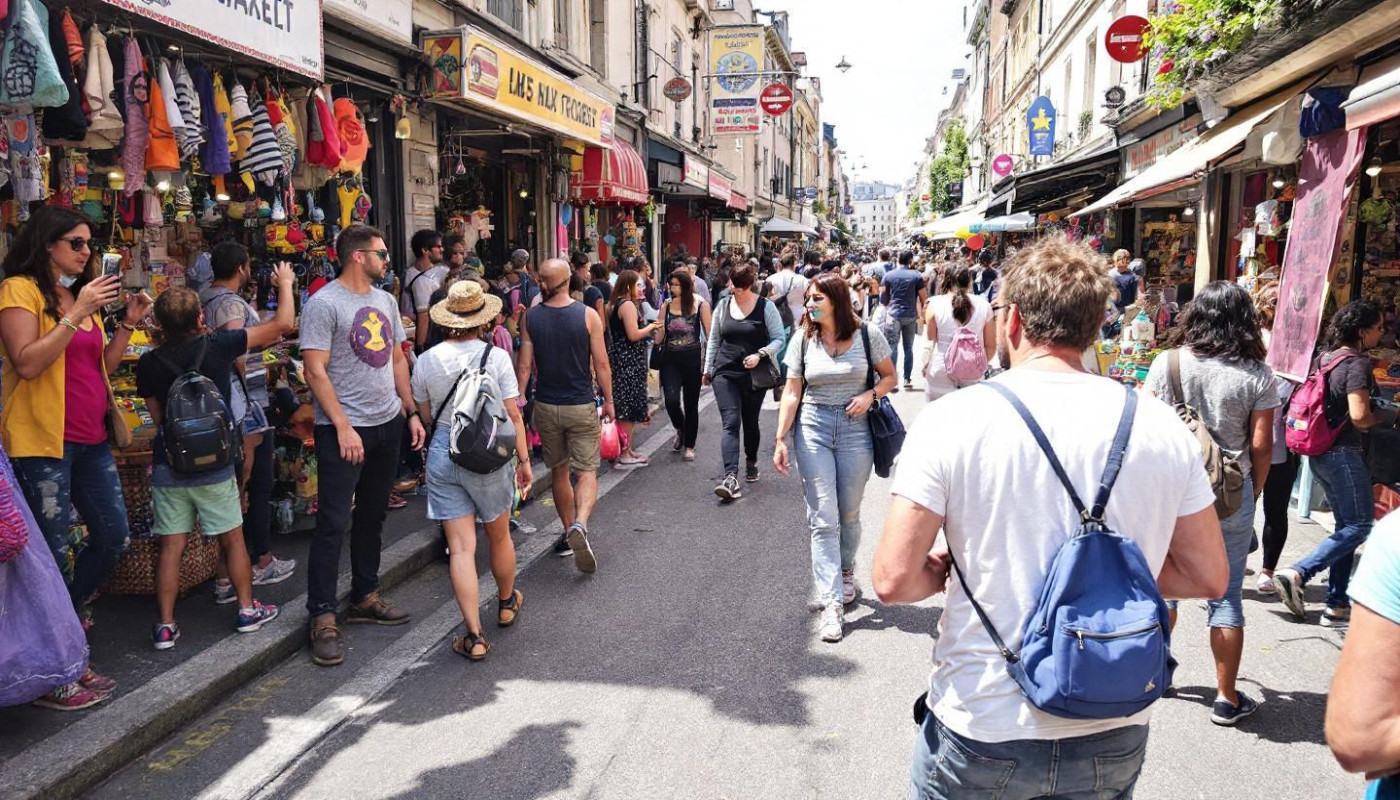
The same dynamic appears in micro-decisions: do you follow the crowd to the famous viewpoint, or step into a side street because the sound of a market draws you in? In practice, unexpected activities often emerge from one of three triggers, and each trigger signals something different. First, “sensory pull” moments, a smell, a melody, a street performance, tend to reflect attentional flexibility and a willingness to let the environment lead. Second, “social invitations,” a conversation that turns into a shared meal, can indicate social confidence and a lower perceived risk in unfamiliar settings. Third, “constraint pivots,” when something goes wrong and a new plan is invented, highlight resilience, creativity, and the ability to reframe frustration as opportunity.
Even the decision to do nothing can be revealing, and not in a negative way. Choosing an unstructured afternoon in a park, or lingering in a café without posting, can signal a mindset oriented toward restoration rather than conquest, a shift many travelers are making as burnout becomes a common theme in workplace surveys. The growing popularity of slow travel, longer stays with fewer headline stops, suggests that for a slice of the market, the “unexpected” is not accidental at all; it is designed as breathing room.
The best detours test your comfort zones
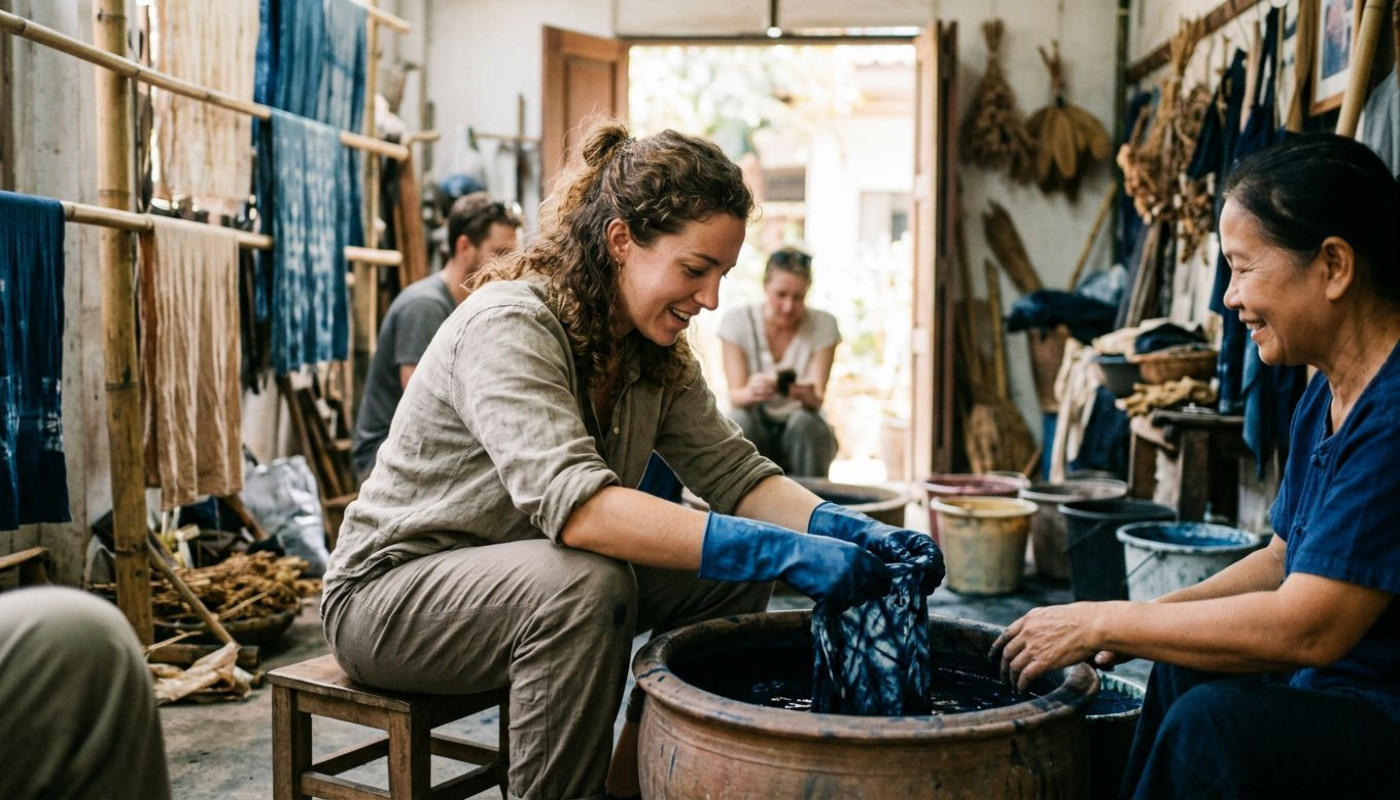
Surprises are not neutral; they test boundaries. An unexpected activity often asks a traveler to negotiate comfort zones in real time, and that negotiation can be more informative than the activity itself. A last-minute cooking class in a stranger’s kitchen, an improvised ride on public transit to a non-touristy neighborhood, or an invitation to join a local celebration forces quick assessments: Is this safe? Is this worth it? Do I trust my instincts, and can I tolerate being slightly out of my depth?
Psychologists frame these moments through the lens of risk perception, which is shaped less by objective danger than by familiarity, control, and social cues. Travelers who seek out unplanned experiences frequently report a higher tolerance for ambiguity, yet they are not necessarily reckless. Many are selective risk-takers: they will try the street food stall with the long local line, but they will avoid the empty one; they will say yes to a neighborhood walk after checking transport options, and they will keep a clear exit plan. The behavior looks spontaneous, but it often contains a quiet structure, a form of “bounded exploration” that balances novelty with safety.
Comfort-zone testing also reveals values. A traveler who chooses a volunteer morning, or a community-led workshop, may be expressing a desire for reciprocity and meaning, rather than a simple hunger for novelty. Meanwhile, someone who prioritizes adrenaline, a steep hike, a late-night dance floor, may be seeking intensity and story-worthy peaks. Neither approach is superior, yet they imply different emotional goals: connection, mastery, recovery, status, or self-expansion. Travel becomes a mirror, and detours are the moments when the mirror is hardest to ignore.
There is also a social dimension that changes the meaning of “unexpected.” In groups, detours can expose leadership styles and conflict tolerance. Who pushes for the safe option, and who argues for the unknown? Who compromises, and who withdraws? Even couples learn quickly whether they share a threshold for uncertainty. Tour guides often notice that the travelers who thrive on spontaneous add-ons, a last-minute market stop, a surprise mezcal tasting, are not always the most experienced travelers, but they are often the ones most comfortable negotiating minor friction without letting it sour the day.
In cities where the cultural density is high, the detour effect intensifies. You can plan the major sites, yet a single block can shift the day’s narrative, because the street itself offers a constant stream of prompts. For travelers who want that kind of flexible structure, curated local guidance can help turn serendipity into something safer and richer, which is why services like https://www.mexicocity-trip.com have become part of how some visitors balance spontaneity with context, especially when language, transport, and neighborhood knowledge shape the quality of the “unexpected.”
Small choices, big clues about values
What you do on a free hour matters. Not because the activity is inherently profound, but because it reveals what you prioritize when you are released from obligation. A traveler who uses a spare morning to chase a niche museum, a design bookstore, or a historic cemetery is often expressing a mindset oriented toward learning and depth. Someone who heads straight for a panoramic rooftop is not shallow; they may be driven by aesthetic reward, photography, or the pleasure of orientation, seeing the city as a whole before diving back into it.
These choices are also shaped by cultural capital and previous travel experience. People who have traveled widely may show less urgency to “collect” landmarks, and more interest in the ordinary textures of a place, supermarkets, commuter routes, neighborhood cafés, because novelty shifts from monuments to daily life. First-time visitors, by contrast, often feel the pressure of scarcity: limited days, long flights, and the fear of missing the iconic. The unexpected activity in that context can be a rebellion against the tyranny of the checklist, a decision to reclaim agency in a landscape of must-sees.
Spending is another revealing lens, and unexpected activities can expose how travelers think about value. Some will splurge on a single immersive experience, a chef’s counter, a guided architecture walk, a private lesson, while economizing elsewhere. Others prefer many small pleasures: street snacks, local transit, inexpensive live music. These patterns often reflect not only budget but philosophy, whether travel is seen as a rare luxury to maximize, or a recurring habit to sustain. Industry data has repeatedly pointed to experiences as a resilient category even during periods of uncertainty, and the rise of “experiential” spending suggests that for many, the story and the feeling matter as much as the object.
Unexpected activities also highlight how travelers relate to place ethically. Do they gravitate toward community-led tours, locally owned businesses, and cultural experiences framed with respect, or do they default to the easiest, most heavily marketed options? The decision is not always conscious; algorithms and hotel concierge lists shape it. Yet when travelers pause, ask questions, and choose a smaller operator because it feels more grounded, they are signaling a mindset attentive to impact and authenticity, even if they would not use those words.
And then there is the digital layer. Some travelers chase “shareable” moments, and their detours are engineered for the camera. Others deliberately seek the unphotographable: a long conversation, a quiet street, a meal eaten slowly. That split is not simply generational; it often reflects how people regulate memory. For some, recording is how they hold on; for others, recording interrupts presence. The unexpected activity, chosen without an audience in mind, is often the clearest clue to what the traveler truly wants from the trip.
How to design room for surprises
Serendipity is easier when you make space for it. The travelers most likely to stumble into meaningful unexpected activities are not always the least organized; they are often the ones who plan in a particular way, booking the non-negotiables early, then protecting time blocks that are intentionally undefined. That structure reduces anxiety, because you know the essentials are covered, yet it keeps the schedule porous enough for a detour to fit.
One practical approach is the “two-anchor day”: choose two fixed points, a morning visit and an evening reservation, then let the afternoon be guided by what you learn on the ground. Another is the “neighborhood day,” where you pick an area rather than a list of sites, and you explore by foot with a few saved pins for food, parks, and viewpoints. Both methods reduce transit fatigue and increase the odds of discovery, because you are not spending the day commuting between highlights. They also align with what urban researchers have long observed: many of the most memorable city experiences happen at street level, in the unscripted interactions between people, commerce, and public space.
Safety and comfort do not have to be sacrificed to spontaneity, and experienced travelers often use quiet heuristics. They look for crowds that are local rather than tour-bus dense, they keep copies of addresses offline, they note the last metro times, and they set a clear meeting point if traveling in a group. These habits make it easier to say yes to an unexpected invitation, because the baseline logistics are secure. In cities where context matters, history, etiquette, neighborhood dynamics, having a guide for part of the trip can function as a shortcut to better surprises, turning “random” into “well-informed.”
Finally, the best surprises often follow curiosity, not impulse. Curiosity asks one more question, reads one more plaque, takes one more turn because something feels interesting. Impulse, unchecked, can lead to shallow novelty that disappears the next day. The mindset difference is subtle but powerful, and it is precisely what unexpected activities reveal: whether a traveler is chasing stimulation, or seeking understanding, whether they want to be entertained by a place, or changed by it.
Turning curiosity into a concrete plan
Book the fixed points early, and budget for one paid experience. Check city passes, museum free days, and local transit cards; they lower costs and friction. If you want guided context, reserve ahead in peak seasons, and keep one day lightly scheduled so an unexpected idea can take over without stress.
Similar

Why Your Next Holiday Starts With Choosing The Right Excursion
Can Slow Tourism Redefine Your Next Destination Experience?
Wandering Beyond Borders: How Destinations Shape Your Travel Narrative
When Local Secrets Outshine Tourist Hotspots: Lessons From Offbeat Destinations

From Bucket List To Bespoke: Crafting Journeys That Go Beyond Typical Routes

Essential Steps To Verify Your Business On Social Commerce Sites
Exploring The Intersection Of Urban Parks And Vibrant Market Cultures

Exploring The Impact Of Asset Discovery On Business Security

Exploring The Benefits Of Renting Versus Buying Winter And Summer Sports Gear
